The House Stands Tall
The Social Dimension of Dar el Fan and Janine Rubeiz’s Curatorial Activities during the Civil War in Lebanon

© 2025 Flavia Elena Malusardi
This article examines the curatorial activities of Janine Rubeiz during the Lebanese Civil War, highlighting her efforts to sustain cultural production amid crisis. This serves as an entry point in the analysis of Rubeiz’s use of art as a medium for political and social engagement. Drawing on concepts such as art agency and exhibitionary sociality, the article situates the two large-scale exhibitions Liban 78 and Beirut Tabaan and the gallery she opened at her own flat as dynamic, relational spaces that transcended traditional art displays to assume a deeper role. These initiatives, while heralding the social importance of culture in times of crisis, provided artists and audiences with opportunities to confront and renegotiate understandings of belonging, community, and the memory of the war. Ultimately, the essay challenges the assumption that periods of conflict disallow artistic and intellectual endeavours. In doing so, it contributes to the analysis of art’s presence and role during the Lebanese Civil War, opening research terrain previously obscured by the focus on postwar artistic production and critique.
Janine Rubeiz, Dar el Fan, Lebanese Civil War, Art Agency, Exhibitionary Sociality, Cultural Resilience
This article was received on 8 January 2025, double-blind peer-reviewed, and published on 17 December 2025 as part of Manazir Journal vol. 7 (2025): “Defying the Violence: Lebanon’s Visual Arts in the 1980s” edited by Nadia von Maltzahn.
Dar el Fan was completely destroyed and looted, only a few archives could be saved. These thin sheets, witnesses of our effort, seem very precious to us today, because it was perhaps the only conscious work that was carried out in order to unite, to link, to establish a dialogue.1
With these lines, cultural advocate Janine Rubeiz (1926–92), founder and three-time president of Dar el Fan wa-l-Adab (House of Art and Literature, Dar el Fan in short) refers to the destruction of the cultural centre she had founded in 1967 with a group of fellow artists and intellectuals in the heart of Beirut. A key figure in Beirut and Lebanon’s cultural scene for her unwavering commitment to art and culture, Rubeiz’s interests spanned visual arts, theatre, and fashion.2 Moreover, she was an active member of the Progressive Socialist Party3 and a staunch advocate for women’s rights in line with the ideas of second-wave feminism.4
Dar el Fan was a vibrant creative hub. Housed in a nineteenth century Lebanese central hall mansion, it served as a non-profit space and a meeting point where artists, journalists, thinkers, researchers, and politicians could meet, socialize, and discuss their work. Over the years, it hosted around two hundred and fifty cultural events including conferences, art exhibitions, movie screenings, poetry readings, musical concerts, and debates on political and current issues, with the aim of bringing art and culture closer to the audience. The centre came to constitute an important catalyst in Beirut, where private-led initiatives filled the gap of an absent state-driven cultural policy – a condition that had long defined the Lebanese cultural landscape. The Sursock Museum, universities, foreign cultural centres, galleries, and local clubs such as the Arab Cultural Club and the Cénacle Libanais5 contended with one another in nurturing intellectuals and promoting their own cultural agenda.6 Within this competitive panorama, Dar el Fan’s role quickly expanded beyond the mere exhibition of art and support of cultural activity. It became a site for the production and circulation of knowledge and ideas, asserting the agency of cultural works not as passive reflections of society, but as active interventions in their own right. With its leftist7 and pro-Palestinian stance, Dar el Fan played a crucial role in shaping subjectivities between the various political and national currents weaving through Lebanon, among tensions fuelled by sectarianism.8 It was described by its founders as “the first actual Lebanese cultural centre,”9 a definition that portrays not only its multifaceted institutional structure but also posits its mission and cultural intentions as aiming to define a Lebanese cultural identity or, as in the words of its president, “personality.” This ambition would become especially vital during the war years, when Rubeiz sought to use Dar el Fan’s curatorial programming as a means of fostering social cohesion amid escalating fragmentation.
With the outbreak of the civil war, Dar el Fan halted its activities in the autumn of 1975, as the building was situated along Bishara el Khoury street, which turned into the infamous Green Line that divided East and West Beirut during the conflict. The war dispersed the members of the executive board of Dar el Fan,10 Rubeiz’s close friends among artists and intellectuals, as well as Dar el Fan’s most loyal and regular audience that either left the country or was unable to move freely in the city. In early 1976, the building was heavily damaged, scattering irreparably the archives and records of events that Rubeiz and other members had meticulously kept for eight years. Despite no longer having access to the building, the atrocities of the war and its impact on the cultural life of Beirut, Rubeiz continued her mission until her death in 1992. The loss of a physical location hindered the execution of events that were previously central to Dar el Fan’s activities such as public lectures, exhibitions, and community gatherings. When possible, these had to be organized in other venues that, however, did not have the same impact or social relevance of Dar el Fan. In order to address these difficulties, Rubeiz began developing alternative strategies to sustain the centre’s mission.
This article offers an overview of Rubeiz’s most significant artistic initiatives during the Lebanese Civil War.11 These encompass two large-scale exhibitions, namely Liban 78 and Beirut Tabaan, and the organization of smaller art exhibitions at her own apartment.12 It traces her commitment to supporting cultural production throughout the conflict, which serves as a key entry point for analysing her use of art as a vehicle for social engagement. I will draw on concepts of art agency13 and exhibitionary sociality14 which consider art not merely as an object but as a relational and transformative experience, and exhibitions as dynamic players in the social and cultural discourse rather than static displays. In this sense, they are imbued with dimensions that extend beyond their primary functions, and they come to constitute what Kirsten Scheid defined as “art acts.”15 These, which form agency through art, occur in specific sociopolitical contexts and enable audiences to confront, negotiate, and reshape their understandings of identity, history, and community. Together, Liban 78, Beirut Tabaan, and the home gallery will be considered as art acts because they constituted spaces of agency where resilience was articulated amidst the war. More specifically, Liban 78 and Beirut Tabaan served as social gatherings where a collective memory of the conflict was shaped. The home gallery provided a haven for artists, but, more importantly, constituted an informal space for encounters and dialogue across different generations and sects. The analysis also sheds light on how the vision of Dar el Fan evolved in response to the crisis. During the war, its role began to shift: whereas it had previously operated primarily as a cultural institution, it increasingly took on the function of a social bond. Although differently, these initiatives became a tool for the elaboration of the lived violence and the constitution of a social group necessary, as it has been argued by Peleikis in her work on a multi-confessional village in Lebanon, for the very survival of the nation.16
The research draws on archival materials from newspapers and magazines in addition to oral history. The significant loss of Dar el Fan’s archives has impacted the available sources. The inherent fragility of oral history adds further challenges, as the passage of time has restricted the availability of key informants. To validate and cross-reference the oral accounts, reliance on contemporary sources such as press articles has been crucial. These have provided an alternative perspective, serving as supplementary evidence to corroborate or challenge the information obtained through oral histories.
The Lebanese Civil War took place from 1975 to 1990 and was one of the most devastating conflicts of the late twentieth century. In addition to the large number of dead, much of Lebanon’s infrastructure was shattered and the war had a deep, long-term impact on the art and cultural scene, affecting both organizations and artists’ production, with consequences that undermined the vibrant cultural scene of prewar times. Although it is difficult to gather exact information and statistics, research currently undertaken provides a panorama on how the conflict destabilized the established network of official and unofficial cultural places and meeting spaces and the social fabric of intellectuals, artists, and journalists that animated it.17 In spite of this, exhibitions and cultural events did continue to happen throughout the war, though at a much lower pace, following the rhythm of the conflict.18
Dar el Fan became inaccessible in September 1975. After having continued its activities amidst the clashes and bomb explosions of the first months of the war, Janine Rubeiz recalls that “on 12 September 1975 we had to leave our headquarters in disaster […]. During the summer of 1975, keeping optimistic, we had established almost completely the programme of the upcoming season. But we had to face the facts.”19 Soon the area became a battlefield for the militias, and the building was heavily damaged. In February 1976, An-Nahar published a short statement from Dar el Fan, announcing the destruction and the looting of the building with the following words: “We hope that we can rescue some intellectual documents to remain a witness to our cultural activities and a contribution to the building of a better future.”20
The civil war and the physical destruction of Dar el Fan had a profound impact on Rubeiz, who retired from the cultural scene for two years. Disheartened by the lack of government support for the cultural sector, she reflected about cultural policies and practices, pondering on the growing challenges of the Lebanese artistic community. In this period of introspection, she participated in the discussion over the creation of a Ministry of Culture. Such debate in Lebanon was recurrent, involving various cultural and intellectual figures at a height in the early 1970s.21 In March 1971, Dar el Fan had hosted a debate on the topic, titled “For a Ministry of Culture,” chaired by poet and Lebanese nationalist Said Akl, with the participation of the French and Polish cultural attachés, the founder of the daily L’Orient, Georges Naccache, and modernist architect Wassek Adib, who stressed how a dedicated ministry could help artists and intellectuals feel more connected to their nation.
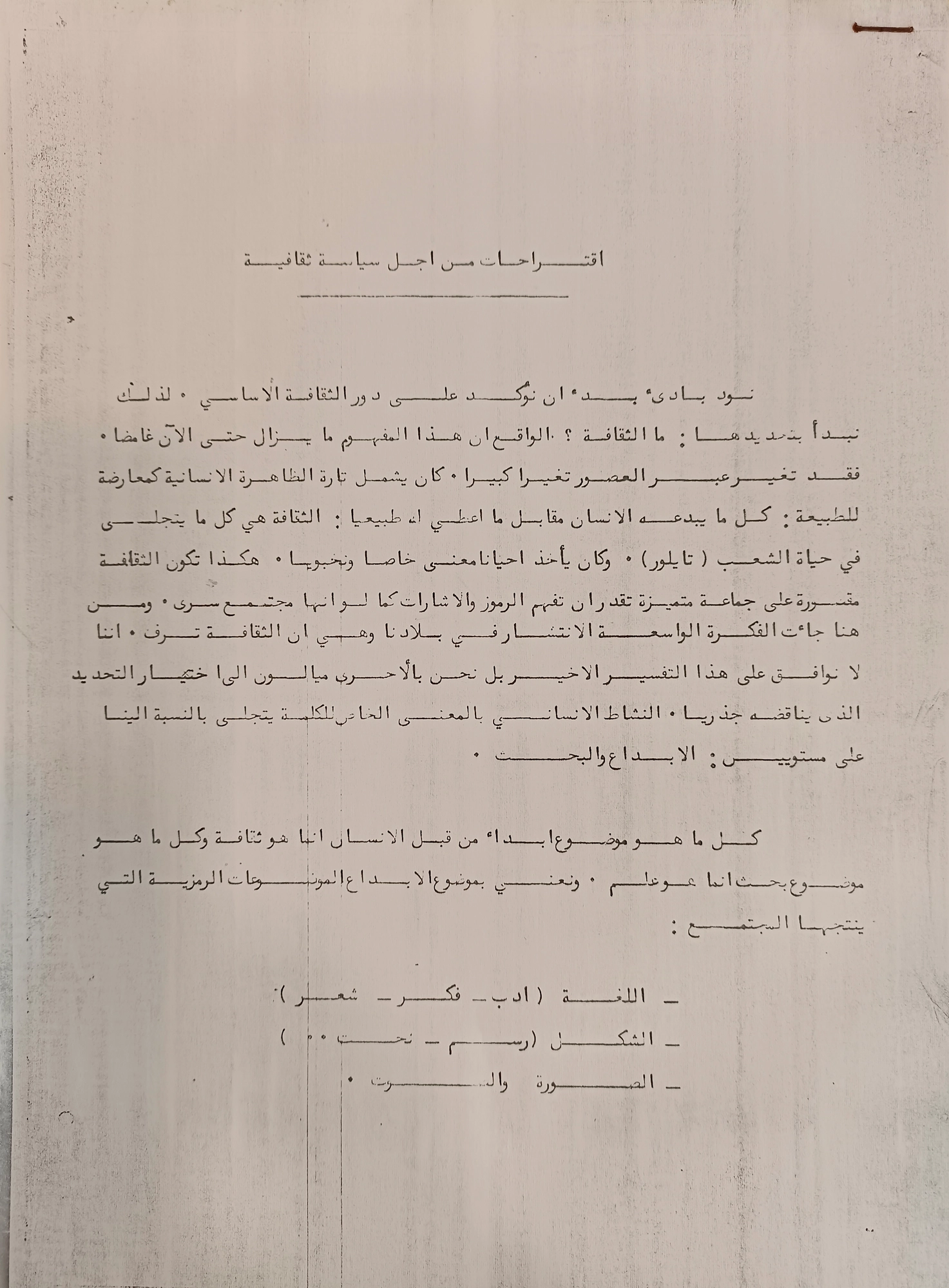
Rubeiz’s reflections culminated in her deeply considered 1977 Proposal for a Cultural Policy (Iqtirahat min ajl siyasa thaqafiya) (fig. 1). Published in the local newspapers and addressing the then-president Elias Sarkis, the Proposal emphasized the role of culture and the urgent need for concrete government support, calling for the establishment of a Lebanese Ministry of Culture from which all Lebanese citizens could benefit.22 The manifesto began by defining culture as “a conscious and unconscious foundation for society.”23 Building on this premise the ministry’s role should be to ensure egalitarian access to culture. This would foster cohesion within the country and lay the groundwork for building a strong Lebanese nation, because “it [was] only through culture that Lebanese citizenship [would] be realized on a profound level.”24 The publication of the Proposal after two years of civil war was significant not only as a means to secure rights for artists but, more importantly, to empower them as citizens with an active role in society, especially in promoting culture as a unifying tool in a time of crisis.
The Proposal was released a few weeks before the opening of the large-scale exhibition Liban 78, which seemed to reinforce the central premise of the Proposal by positioning culture as a site for reflecting on the present, transcending societal divisions, and imagining a more hopeful collective future. Liban 78 functioned as an art act because it was not merely a display of artistic works, but a performative and civic gesture in itself. Its theme, “the Lebanon we want and hope for tomorrow”25 and the visuality of the artworks proposed an elaboration of the lived violence and a narrative of the war and its aftermath.
Held at the Glass Hall of the Ministry of Tourism in November 1977, Liban 78 came at a time when many believed the civil war was drawing to a close. It was preceded by an open call issued through various local newspapers, inviting visual artists to participate. A prize of 1,500 Lebanese lira was also established and awarded to the best artwork, sponsored by the National Council for Tourism Development and in line with Dar el Fan’s mission of offering concrete support to artists. Renowned artist Aref El Rayess (1928–2005), then-president of the Lebanese Artists Association of Painters and Sculptors, designed the poster for the exhibition (fig. 2). A lifelong friend of Rubeiz and a regular exhibitor at Dar el Fan, El Rayess’s involvement was particularly significant given the exhibition’s content and his influential role in the Lebanese art scene as a pioneering modernist artist. Rayess was also known for his politically charged works referring to anti-imperialist stances, and sympathetic to the Third World Movement and the Palestinian Cause.26
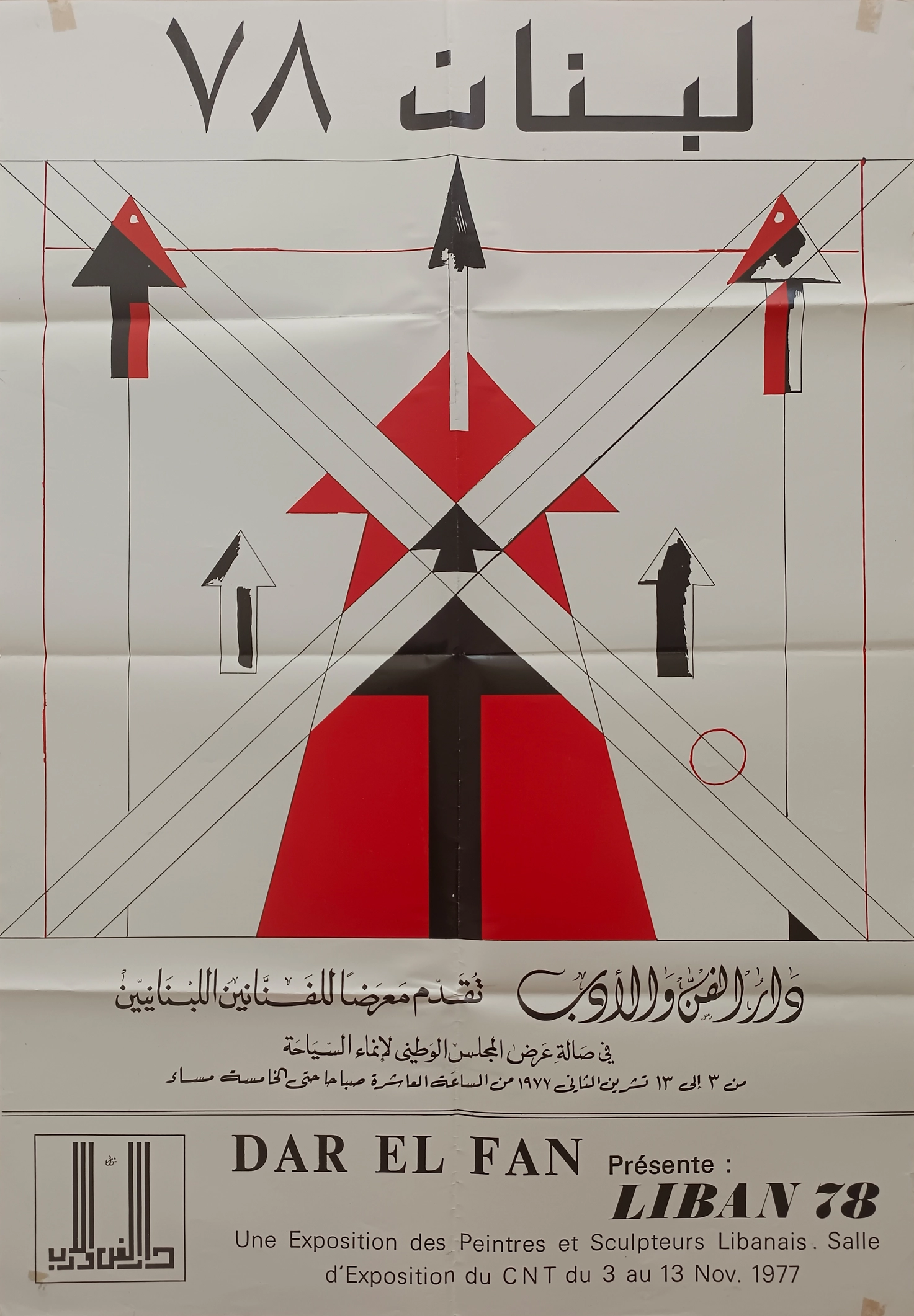
The exhibition grouped around one hundred Lebanese artists and showcased roughly one hundred and fifty artworks encompassing different media such as sculpture, engraving, murals, photography, and tapestry.27 The participants ranged from established figures like Aref El Rayess, Paul Guiragossian, Huguette Caland, Chafic Abboud, Yvette Achkar, the Basbous brothers, and Saloua Raouda Choucair, to emerging talents such as Samir Abi Rashed, Hassan Jouni, and Nadia Baydoun; many others were simply amateurs. This mix of seasoned artists and new voices highlighted Dar el Fan’s mission to nurture diverse artistic expressions and support young creatives alongside better-known ones. The exhibition was divided into a main section serving as a focal point, and sub-sections celebrating the artistic contributions of specific regions. A special “Parisian section” featured Lebanese artists based in Paris, for instance, offering a glimpse into their diverse perspectives and experiences. These included Assadour, Juliana Seraphim, Solange Tarazi, Huguette Caland, Moazaz Rawdah, and Nadia Saikali, the last of these artists contributing a mural sent from the French capital.28 The reviews mention that other sections, focused on artists from the south and from Tripoli, were represented as well, without however, providing further details.
Although no catalogue was produced, the available documentation of press clippings with the images of the artworks shows that most of the pieces were influenced by what was commonly referred to as “the events”29 between 1975 and 1977. Noteworthy works included Samir Abi Rashed’s Salvation and The Phoenix, Achkar’s The Reconstruction, and Moussa Tiba’s The Exodus.30 The titles of these artworks provide an indication of the thematic focus as well as their visual content. Together, they not only reflected the urgency of the moment but also functioned as visual agents of memory and future aspiration. In this sense, Liban 78 held significant importance in the context of 1977 Lebanon, in light of the perception of the war that devastated the country. Images both of the conflict and in the conflict bear what Bredekamp defines as a “Medusa-like power” on the spectator.31 Far from being passive, they create experiences and actions in relation to perception and they shape the reality around them. Within this framework, they acquire an active, performative nature in shaping how societies remember, process, and rebuild during and after conflict. I argue that both the exhibition itself, as an act of coming together, and many of the artworks on display, with their visual content and titles, acted as a galvanizing event among the audience to foster unity and an impetus towards “the future.”
This emerges in particular from the reviews of the exhibition, where a discernible will to move on from the events of the 1975–77 war is predominant, privileging present concerns and future possibilities over retrospective analyses of its causes. Widely attended by the public, the exhibition received extensive media coverage, with almost all the national newspapers featuring a review of it among their pages. It was described as a celebration of the artistic community that was still active in Lebanon after two years of war, and that was longing for peace and a reprise of cultural activities. One newspaper described the fighting of the past two years as “an hour of childish anger that had passed,”32 underscoring a naive understanding of the conflict and the urgent desire to move beyond the turmoil. An article titled “A National Artistic Uprising from Under the Tragedy,” a sentence that, while portraying Lebanon as a fragmented nation, underlined a creative uplift that would bridge divides and embody unity.33 Again, the pages of Al Shorouq praised Liban 78 as an exceptional artistic display.34
With a hundred and fifty artworks on display, the event seems to have prioritized the inclusion of the widest possible range of artists and works over strict curatorial selection. One of the most common criticisms was that the choice of the artworks did not adhere to conventional aesthetic standards. Some critics argued that works were included regardless of their artistic quality, stressing their immature and utopian approach. Abi Saleh in Le Réveil35 claimed that the lack of curatorial discernment weakened the impact of the exhibition, which was proposed by an institution that was supposed to guide the Lebanese public in both politics and art. He described it as “a medley of the best and the worst” stressing the faults of a jury that opted to include everything resulting in a kermesse which shifted the focus, the potential, and the quality of some of the artworks.36 The critic writes: “A group exhibition […] is not prepared like a charity ball. It is not enough to promote national unity for the exhibition to be a success.”37 In his opinion, the exhibition’s themes mainly seemed to revolve around clichéd slogans and motives in relation to “the nation” or national unity, without delving into a proper evaluation and selection of the artworks, thus feeding an “artistic confusion”38 unworthy to represent the Lebanese scene.
While Le Réveil might have been sceptical of artists and artistic production falling outside the official canon, this review reinforces the social role of an exhibition whose significance was, regardless of its declared curatorial statement, to constitute a space of resilience where violence was processed, and possibly surpassed, through visual culture. Indeed, many acknowledged the exhibition’s unifying force in a fragmented country and an antidote to war, to revive a sense of solidarity. Rubeiz herself asserted that “we do not believe that the role of culture at this stage can go in any other direction.”39 Liban 78 functioned as a bridge for communities to come together, interact, and build social connections while grappling with complex themes such as conflict, nationhood, and identity. In this sense, the exhibition enacted a form of collective agency where civil society was not only represented but actively constituted through a cultural initiative, transforming the act of cultural gathering into a statement of resilience and shared belonging. Both the exhibition and the art on display offered a paradigm of engagement with the concept of “being Lebanese” and its negotiation during a civil war. It foregrounded belonging as a cultural and performative practice—one in which artists, curators, and audiences asserted their “Lebaneseness,” a form of citizenhood grounded in a shared presence, participation, and hope for the future. In such a way, the central theme and the artworks played a crucial role in shaping a memory of the lived war, nurturing a national bond rooted in a cultural production that aimed at offering a visible alternative “tomorrow.”
To overcome the loss of space and the closure of many galleries in the capital, some started hosting exhibitions in private apartments.40 Janine Rubeiz began using her flat in the Scotch Club Building in Raouche as exhibition space and a meeting place, and became one of the most active cultural hosts during the war. This section will explore the dual nature of Rubeiz’s home gallery. On one level, it functioned as a resilient space that sustained cultural production amid the devastation of war. On a deeper level, however, it became a haven for encounter and dialogue, a site where new forms of community were forged. In this sense, it did not simply replace Dar el Fan, but rather extended its ethos into a more intimate network of interactions. Even in the absence of the formal institution, the spirit of Dar el Fan persisted, carried forward through relationships, memories, and artistic practices that transcended its physical space. This persistence of cultural life, operating through informal gatherings, emotional attachment, and collective memory, suggests that absence or acting the absence itself became a powerful mode of presence, shaping how the institution’s legacy was lived and reimagined.
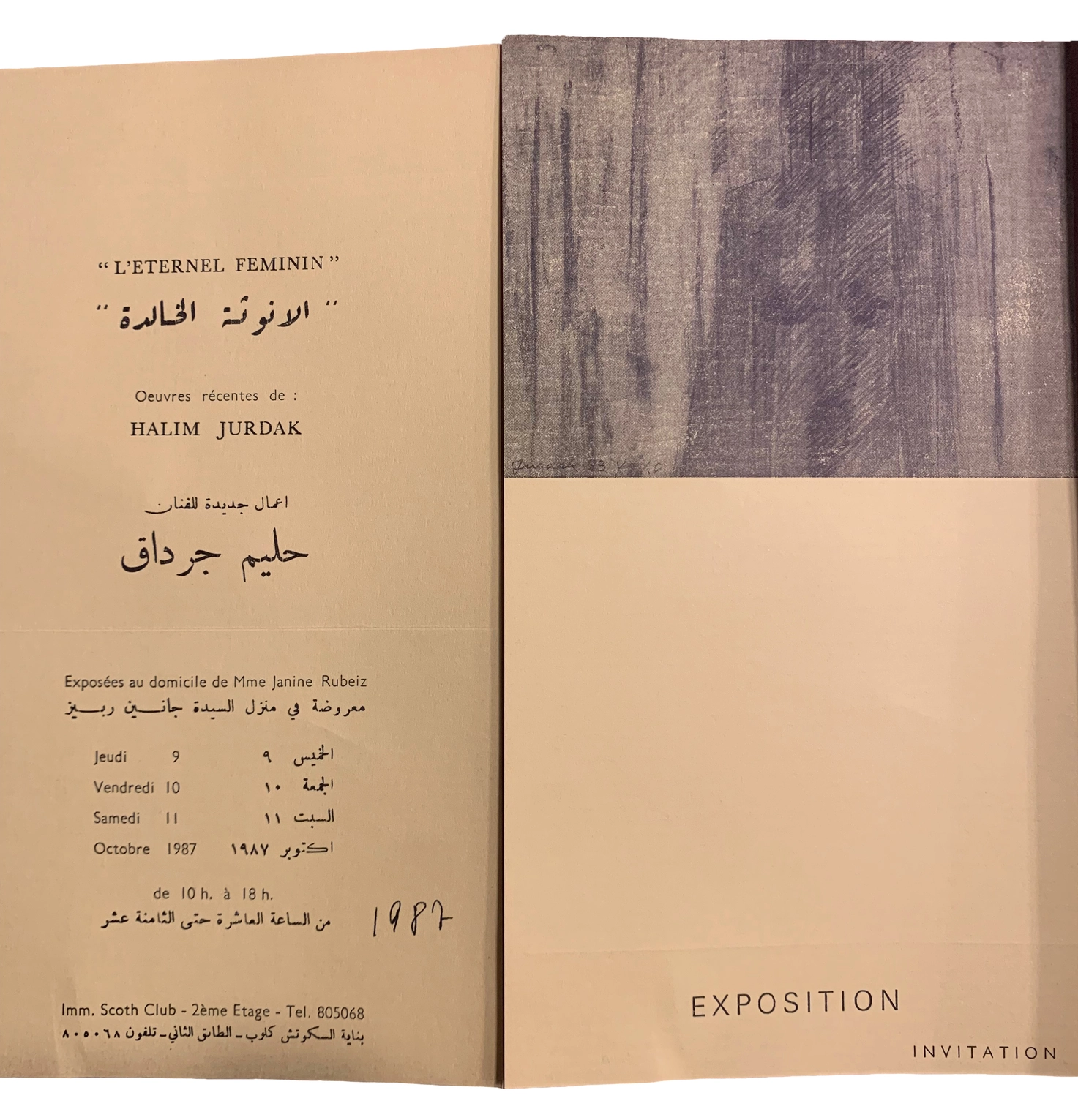
Rubeiz opened up her house for the first time in December 1980 to exhibit the works of artist Michel Akl (1922–97). After having studied with César Gemayel and Omar Onsi, Akl exhibited his work in Beirut throughout the 1960s, but his house was destroyed during the war and most of his artworks were dispersed. Rubeiz was committed to provide him with economic support in a city where opportunities for artists had become scarce. The exhibition featured forty-six pieces,41 including canvases, paintings on Masonite, and China ink drawings. Roughly half of the works were sold, indicating that both the public and the market were still active during the conflict. In October 1987, she displayed the work of Halim Jurdak (1927–2020), who had previously exhibited at Dar el Fan in 1970. A graduate of the Academie Libanaise des Beaux Arts (ALBA), Jurdak also lived and studied in Paris, travelled extensively in Europe, and was well known within the cultural community in Lebanon, where he was a member of the Lebanese Association of Painters and Sculptors. His work underwent different phases and subjects, spanning figurative and non-figurative abstraction, cubism, and nature painting.42 The 1987 exhibition, titled L’éternel féminin (fig. 3), presented a collection of fifty-three abstract nude paintings that the artist had worked on for three years. The artworks focused on the female body, portrayed in the style of abstract expressionism. Colour and its application were central to the pieces, featuring minimal details and blurred lines that evoked a sense of suspension in both space and time. Rather than emphasizing their exterior appearance, the bodies seemed to invite a deeper, introspective analysis.43 The opening of the exhibition, which received good coverage from the press despite its brief duration, saw a positive turnout and the presence of established artists Hussein Madi and Amine El Bacha, alongside younger artists such as Mohammad Rawas and Loulou Bassiri.44 This way, Rubeiz’s apartment served as a meeting place not only for the exchange of artistic ideas but also to foster encounters and dialogues among artists of different generations and across sectarian backgrounds.
Exhibitions for artists who had remained in Lebanon were not limited to Rubeiz’s apartment. In December 1985, she organized a solo show for emerging talent Mahmoud Zibawi (b. 1962) at the Carlton Hotel. A second exhibition of his work followed in 1987 at ALBA. At the Carlton, he presented around thirty mixed media paintings and about twenty charcoal and China ink drawings. In line with his previous production, Zibawi focused on the human face, paying particular attention to its expressions. While the subjects in his earlier work were characterized by a sense of anguish, the ones exhibited at the Carlton seemed to be more concerned with meditation and introspection. The style drew inspiration from abstraction as well as from what was defined by both the artist and some critics as “Byzantine” aesthetics, for the centrality of the human figure and the use of gold in the background, in contrast with the darker tones employed for the previous portraits. Rubeiz described the exhibition as able to “illustrate very well the Islamic and Christian heritage of Lebanon.”45 This reading is particularly interesting amidst a backdrop of a war fought along a strong sectarian axis, and it attempts, once again, to use culture as a tool to level differences and foster connection across different groups. In this case, the “heritage of Lebanon,” rather than being simply constitutive of its past and present, is instrumental to building its very own future after ten years of war.
These exhibitions, organized under the banner of Dar el Fan, maybe in an attempt to continue the space’s mission and role, had different characteristics than Liban 78 and Beirut Tabaan, which will be discussed below. As the cultural centre aimed at forming and orientating the audience’s taste in the arts, these were more attentive in their curatorial selection and similar to those organized in art galleries, targeting an audience of art connoisseurs rather than the general public. Likewise, the display of art and the informal encounters at Rubeiz’s home marked a shift in how art was exhibited and received. It provided a venue for artists to display their works, but it also created a more intimate environment for cultural exchange and discussion. Unlike the earlier period of Dar el Fan, which featured a widely attended programme of public lectures and debates, by the early 1980s these forms of intellectual engagement appear to have given way to more spontaneous interactions. While existing documentation focuses primarily on the exhibitions and there is little concrete evidence of discussions or exchanges about art during this period, it is probable that, given Rubeiz’s central role in the art scene, such conversations did persist, albeit they tended to be more exclusive, and accessible to individuals already within Rubeiz’s social circle, who were more likely than strangers to come to her private home. As such, it is uncertain to what extent these exhibitions reached the public who might have used to visit Dar el Fan for more widely consumed cultural products. This contrasts both with Liban 78 and Beirut Tabaan, where the audiences were broader and the impact more visible, as well as with the initiatives concerning the political status of the country that Rubeiz organized throughout the war.
Nonetheless, by gathering in this precarious setting, I would argue that participants defied the surrounding chaos, searching for ways to assert their humanity amid the conflict. The absence of Dar el Fan, whether as a physical space or a consistent cultural presence, paradoxically acted a sense of belonging among its community. This absence created a longing and an emotional attachment, as individuals came to associate the institution not merely with its tangible offerings but with the ideals, memories, and culture it represented. The ethos of Dar el Fan was carried forward in the practices, interactions, and art acts of those who had been influenced by it. This distributed presence ensured that the institution’s legacy transcended its physical boundaries, embedding itself in the cultural fabric of the society it served. In this way, absence became a form of presence, reinforcing a collective attachment to Dar el Fan and solidifying its place as a cornerstone of cultural and civic formation.
These dynamics shifted when Janine Rubeiz decided to formalize the space by officially opening a gallery under her name on 10 March 1988, which she ran until her death in 1992.46 The move was likely influenced by both artistic and economic considerations, as a solid business could sustain itself better than a cultural association in the precarious wartime panorama. The gallery was inaugurated with a solo exhibition of watercolours and oil paintings by prominent painter and sculptor Amine El Bacha (1932–2019). Born into a family of open-minded creatives, El Bacha grew up surrounded by artists, musicians, and thinkers who used to gather in his family’s house. His works often drew from his surroundings in Lebanon, featuring landscapes, the buzzing life of the capital, urban scenes, and human figures, rendered in a style that blends impressionism with modernist abstraction and a vibrant use of colours that defy easy categorizations. El Bacha studied art in Paris at the École Nationale Supérieure des Beaux-Arts in the late 1950s. In the French capital, which hosted a great number of artists and intellectuals at the time, he shared his days with fellow Lebanese artists Chafic Abboud and Farid Aouad. El Bacha’s collaboration with Rubeiz dates back to the 1960s, when he contributed to the establishment of Dar el Fan and was among the first artists to exhibit there in 1968. Both El Bacha and Rubeiz remained in Beirut throughout the war, maintaining and deepening their professional and personal relationship.
The watercolour featured on the exhibition’s invitation card depicts a serene picnic in nature, where the figures and natural elements are blurred and undefined, typical of El Bacha’s dream-like, tranquil style (fig. 4). While the use of peaceful imagery may appear incongruous with the surrounding atrocities, it can be understood as an expression of longing for normalcy in the face of prolonged instability. This longing was not merely a nostalgic yearning for a lost past, but an act of imaginative resistance: an attempt to assert continuity and emotional survival in a fractured world. In depicting a serene landscape, the artist evoked an alternative reality anchored in “normal” everyday life. In this sense, the words of his daughter Mahita el Bacha on the artist are telling, as she writes that “some could not understand how an artist could be embedded in a war zone and appear to not quite be there at all. But this is exactly what El Bacha is about: creating his own universe through his work […] generally keeping darkness, sorrow and depression out of the picture.”47 In this way, the aesthetic turn to peace was not escapist but aspirational, offering a symbolic space where the possibility of healing and persistence could be envisioned.
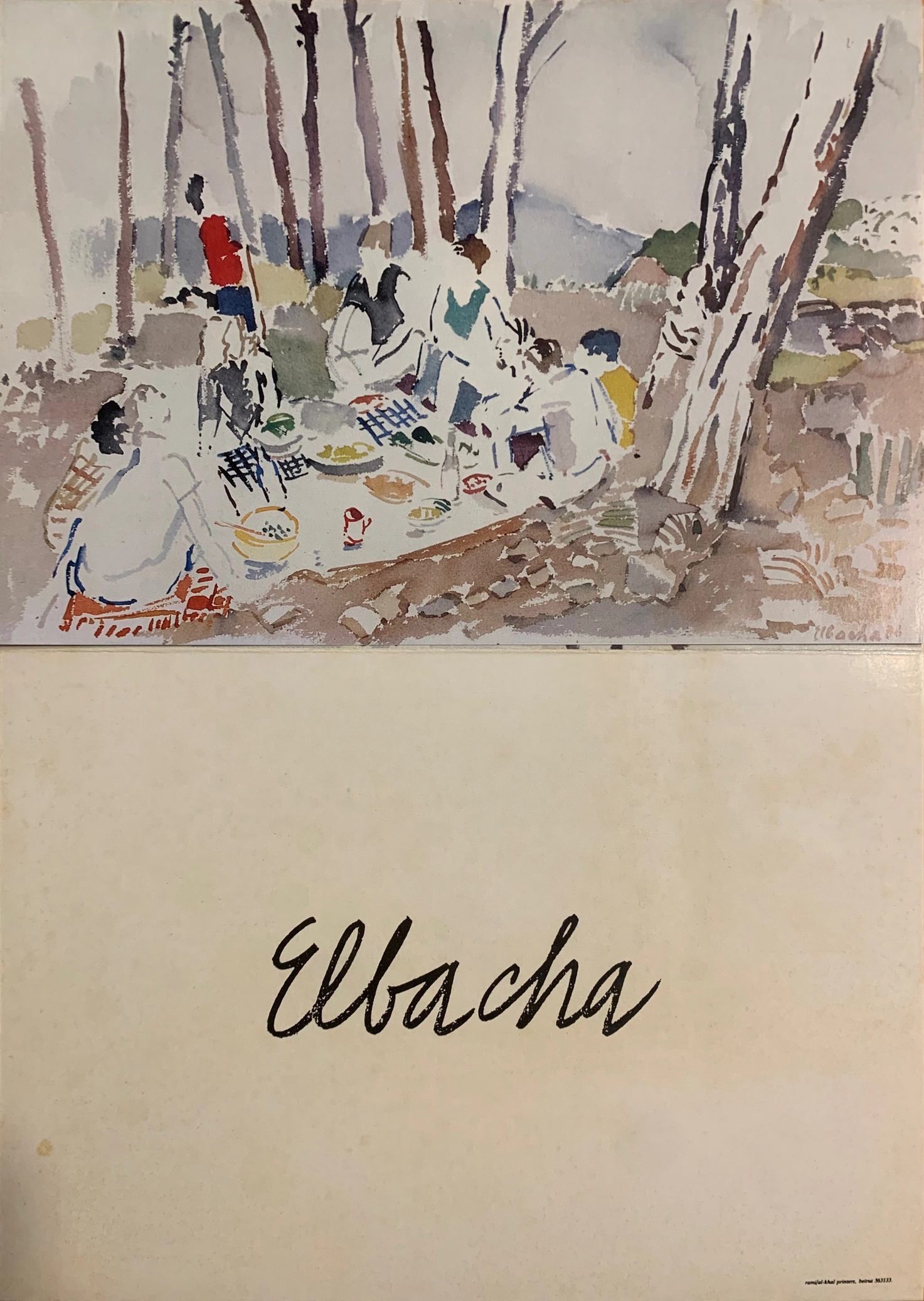
Inaugurating the gallery with a solo exhibition by an artist whose work consistently celebrates Beirut’s vibrant life and the landscapes of Lebanon stands in stark contrast to the surrounding devastation of the civil war. Although such a gesture could be dismissed as the escapism of a privileged elite, detached from the daily suffering, it can more compellingly be read as a conscious aesthetic choice by both El Bacha and Rubeiz. This way the exhibition offered an alternative visual and emotional vocabulary that refused to reduce the city to rubble and conflict. On the pages of Al Tadamun, Taher Ghaddar describes the exhibition as a testament to Lebanon’s resilience, emphasizing that despite the challenges of conflict, the nation will ultimately reclaim its freedom and cultural vitality.48 El Bacha’s works illuminate another aspect of the Lebanese Civil War: the persistence of everyday life amidst the chaos. Despite the constant threat of violence, life, against all odds, did continue. People still sought moments of normalcy, whether by going on picnics, gathering with loved ones, or simply trying to preserve a sense of peace and routine in the midst of violence. As Jean Said Makdisi poignantly recalls in Beirut Fragments, everyday life persisted not in denial of war but in defiance of it, with families continuing to mark birthdays, cook elaborate meals, and create small rituals of continuity amid the chaos.49 People cultivated life amid ruins not just as survival, but as an insistence on hope and futurity in spaces marked by recurring destruction. And they developed practices of “living around violence”50 that reflected both resilience and an effort to preserve ordinary rhythms. These accounts foreground how practices of care, leisure, and sociality coexisted with (and at times resisted) the logics of war. The portrayal of a picnic in a pastel-coloured landscape, far removed from the devastation of Beirut’s wrecked buildings, underscores this enduring human spirit, a quiet act of resistance against the war’s overwhelming darkness.
At a chronological antipode in relation to Liban 78, large-scale exhibition Beirut Tabaan [Beirut, of course] was curated by Rubeiz and comic artist George Khoury at Dar el-Nadwa, a cultural space in the heart of the capital (fig. 5). The exhibition was, once again, a celebration of the creativity present in Beirut, despite its precarious conditions for more than a decade, and a homage to the enduring capital. It opened on 28 October 1989, almost in concomitance with the Taif Agreement, which brought an end to the civil war.51
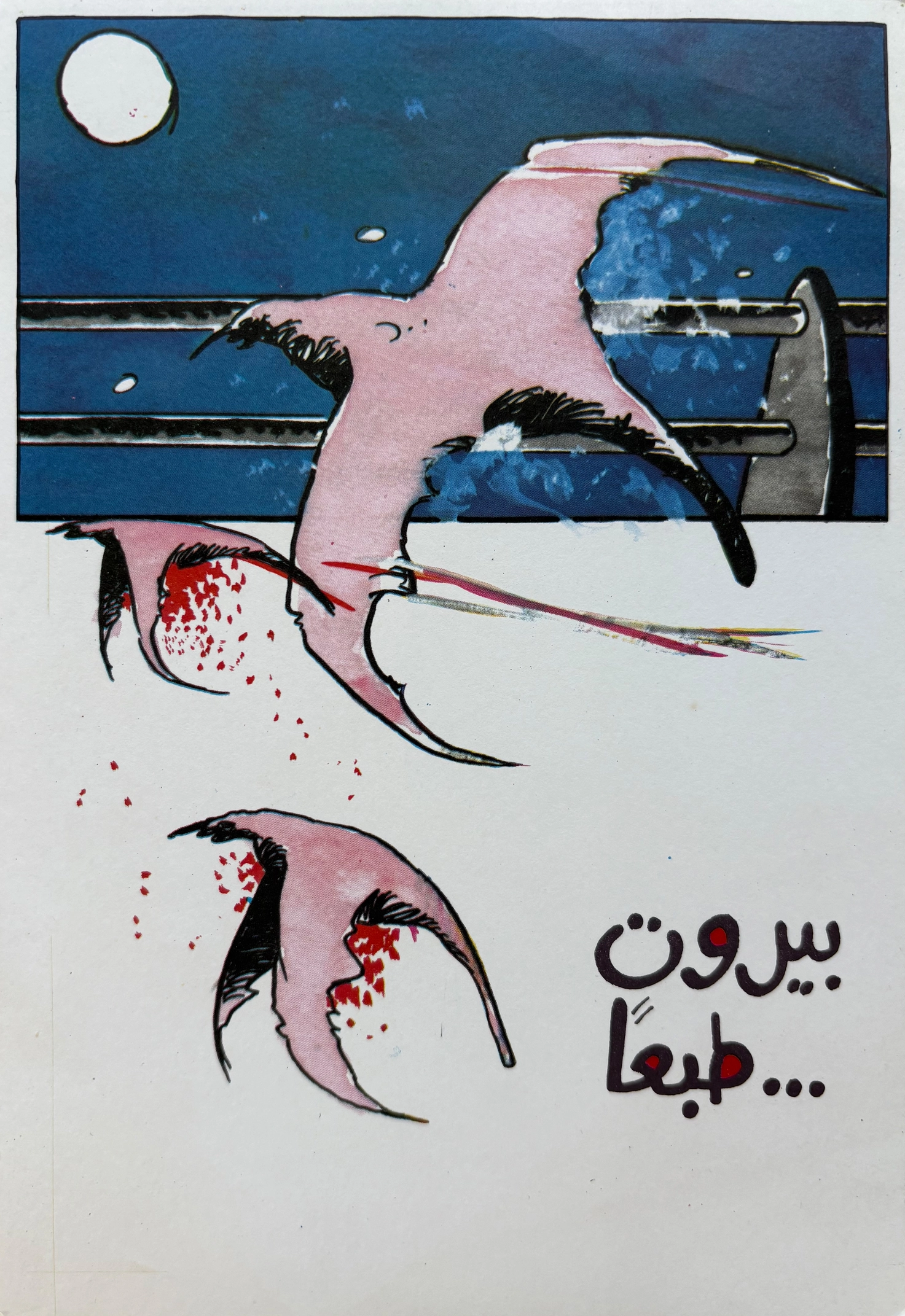
George Khoury (b. 1956), known by his pen name Jad,52 who described Rubeiz as “a diva of the art world,”53 used to attend the exhibitions she hosted at her home. He recalls an incident during one such visit when a violent shelling occurred, compelling them to take refuge indoors until the danger subsided. He attributes the genesis of the idea for Beirut Tabaan to this moment, though this account, like many memories shaped by the affective intensities of war, remains difficult to corroborate. The aim of the exhibition was “to honour Beirut and the survival of its spirit, the continuation of its role and the confirmation of its creativity” as we read in the press release.54 Rubeiz and Khoury assembled a diverse group of roughly forty artists, spanning different ages, levels of establishment, aesthetics, and techniques. Belonging to two different generations, their distinct perspectives emerged in their curatorial choices.55 Rubeiz selected rather traditional works of art, such as paintings and sculptures, reflecting her long-standing connections and deep roots in Beirut’s established art scene. Khoury introduced contemporary forms such as comics, music performances, and installations created from everyday objects and upcycled materials, presenting his engagement with newer artistic practices, while attempting to reframe the parameters of what was commonly understood as art. This blend of curatorial styles underscores the interplay of the traditional and the emerging, highlighting the importance of cross-generational collaboration in nurturing a dynamic and ever-evolving artistic community.
Among the selected artists were prominent figures in the Lebanese art world who displayed their works alongside then emerging talents such as Lulu Bassiri, Mohammad Rawas, and Greta Naufal. Contributions by established artists included a sculpture by Saloua Raouda Choucair, an abstract painting by Yvette Achkar, and a drawing by Aref El Rayess. While these works may not have been particularly ground-breaking in terms of artistic innovation, they bear witness to the artists’ lifelong friendships with Janine Rubeiz and are important testaments to the cultural and social network she had been able to create and maintain, providing a supportive environment for artists during Lebanon’s most tumultuous times.
The themes explored in the artworks, collected in a complete catalogue, varied greatly.56 The display included paintings, videos, music performances, installations, and comics, as well as pieces of writings and video interviews displayed alongside the artworks. This underscored the multifaceted nature of the artists’ responses to the war, blending visual and literary art forms to convey their experiences and reflections. The imagery of the Lebanese Civil War influenced the work of some artists, who depicted the devastated city through photos and paintings. An excerpt of Jad’s comics featured a father carrying his child amidst ruins, while Ali Seif el Din’s photograph captured damaged buildings through the shattered remains of a window. Mohamed Rawas’s piece Beirut Revisited (1989) was rich in symbolic references, hinting towards a shared past, the international community, and the lived violence seen through the eyes of a child.
Other contributions were less direct in their aesthetic approach. Some artworks completely rejected the conflict’s aesthetic, striving to revive some normality. Among these were Lulu Bassiri’s Oud and Georgi Chaanine’s Café. Other artworks aligned with the artists’ trajectory, such as Choucair’s abstract sculpture and Achkar’s painting. Poems and texts in both Arabic and French, such as a passage from Elias Khoury’s novel The Journey of Little Gandhi,57 interspersed the visual artworks, adding literary depth to the exhibition.58 Overall, a sense of nostalgia pervades the artworks, as they seem suspended in time, waiting for the vitality of Beirut to return. The city, its people, and its artists are the subject of Beirut: Shahadat al-fannanin [Beirut: Testimony of artists], a video shot by writer and poet Antoine Boulad while roaming the streets of the capital in October 1989.59 The video shows spaces and individuals grappling with the memories of the war, attempting to make sense of that turbulent period. The artists interviewed reflect on Beirut’s past and its prospects, sharing personal narratives that consider how the city embodies resilience and stressing the role of art as a place to find solace. Janine Rubeiz, who is featured in the video, underscores how Beirut Tabaan is the symbol of a city “which does not want to die despite all that has been done to it.”60 In her article in L’Orient-Le Jour, journalist May Makarem aptly describes the exhibition as “a diary where confidence mixes with chaos.”61
Although it was not the only group exhibition praising artistic endeavours during the war, Beirut Tabaan received impressive press coverage. Local newspapers in Arabic, French, and English, including major outlets such as L’Orient-Le Jour, An-Nahar, and Monday Morning, reported extensively on it. Various sources, including interviews and newspaper articles, highlighted the overwhelming response to the exhibition’s opening, which drew such a large crowd that the organizers had to extend the opening hours to accommodate everyone.62 Attendees and journalists alike noted the vibrant atmosphere, with many people eager to experience the exhibition first-hand. The turnout reflected the sentiments of a population that lived for years between uncertainty and waiting, forced to seek refuge in shelters yet demonstrating a yearning for normalization by continuing artistic and cultural production. Photos in the press clippings portray mainly the “rituality” of drinks and chats at the exhibition’s opening, which in the context of conflict took on an added layer of social significance, resonating as both a celebration and an act of unity. This sentiment was enhanced by the concomitance with the Taif Agreement, which brought a sense of relief for the long-awaited, imminent end of the war. An-Nahar journalist Sami Ayad writes that among the reasons for the exhibition was “to honour the promised peace that was coming to us.”63
Unlike Liban 78, where artworks, regardless of their quality, were prominently featured and celebrated as visual markers in the creation of a narrative of belonging, the narration of Beirut Tabaan shifted the focus from tangible objects to the intangible dynamics of participation and community. Media attention predominantly emphasized speeches and themes celebrating the city’s spirit while a critical analysis of the artworks was lacking. Such absence in the press narratives surrounding Beirut Tabaan appears not as a void but as a deliberate statement, emphasizing the act of gathering as the core of the exhibition’s impact. It highlighted the performative and relational aspects of the event, where the shaping of a civic belonging was rooted in shared experiences within a communal space. Beirut Tabaan succeeded in uniting artists and the broader public and distinguished itself as a social catalyst, fostering connection among people long separated by historical tensions that had fragmented the city (fig. 6).
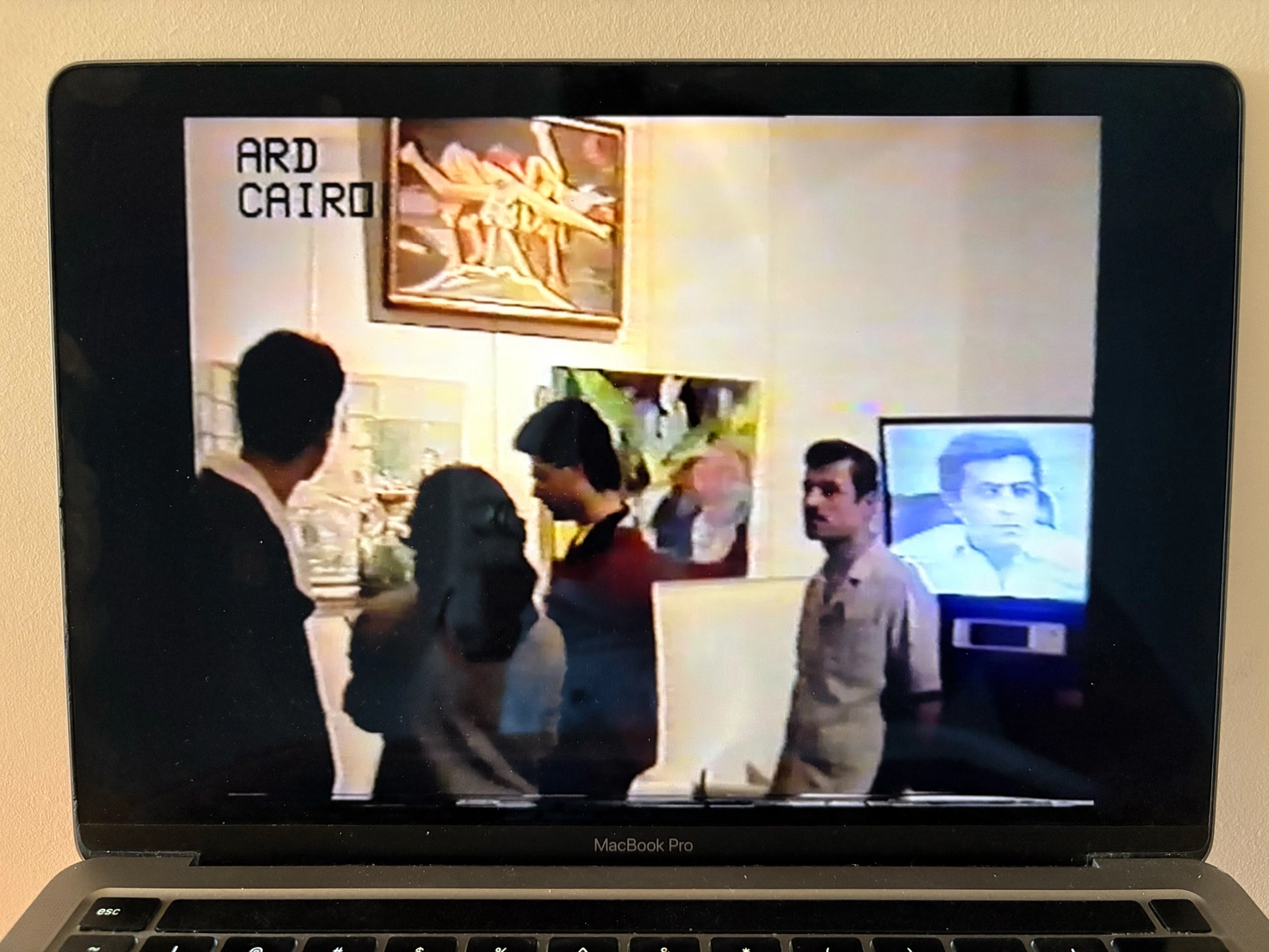
In spite of the positive response of the general audience, comments in the press conference and reviews of the exhibition were diverse. Makarem described it as “a slap in the face of the crisis,” highlighting the “phoenix” aspect often associated with Beirut.64 Faysal Sultan, with similar words, affirmed that Beirut was not dead because “it was still dreaming.”65 This notion of rebirth (often, as mentioned, captured in the enduring metaphor of Beirut as a phoenix rising from the ashes) speaks to a persistent cultural imaginary of the city as resilient, irrepressible, and perpetually self-renewing. While this metaphor evokes a sense of hope and continuity, it can also obscure the structural violence and cyclical nature of destruction by framing recovery as an almost mythic inevitability. Such narratives risk depoliticizing both suffering and survival, shifting attention away from responsibility, governance, and accountability. The phoenix metaphor, then, while emotionally resonant, may reinforce a kind of symbolic resilience that masks ongoing fragility, naturalizing disaster and making rupture appear as a constitutive, even necessary, feature of Beirut’s identity. In this sense, the metaphor is not just poetic, but ideological: it allows for a celebration of endurance while sidestepping the political conditions that produce the need for it in the first place.
Journalist Vicken Cheterian, after attending the press conference, questioned the limits of an exhibition that aimed to be so celebratory. He pondered the role of artists and intellectuals in a wartorn country and whether it was problematic to try to “hide reality” behind the nostalgic and triumphalist tone that emerged from the speeches.66 His critique points to a broader tension embedded in cultural production in times of crisis: the extent to which exhibitions like this one served as symbolic gestures of resilience rather than platforms for critical engagement or aesthetic innovation. Here again, as in the case of Liban 78, the quality of the selected artworks was not of primary importance; rather, the exhibition’s purpose was to gather as many artists as possible and to foster a sense of reconnection. While this impulse toward collectivity was undeniably important in a fractured cultural landscape, it also meant that the artistic contributions were often subordinated to the event’s commemorative and affective dimensions. The focus on celebratory narratives about Beirut, whether its cosmopolitan past, its mythic resilience, its phoenix-like rebirth, risked overshadowing deeper artistic inquiries into trauma, displacement, or the structural conditions that had shaped the postwar reality. In this light, Cheterian’s intervention can be read as a challenge to the political utility of art when aesthetic considerations are instrumentalized in service of national or communal healing.
Despite the critiques about its artistic relevance, the collaborative efforts of Rubeiz and Khoury were instrumental in curating an exhibition whose actual goal was, once again, to forge a shared belonging and unity in a city amid conflict. Beirut Tabaan prioritized the social and symbolic dimensions of the act of assembly related to an artistic event, providing an opportunity to engage in the act of “being together,” crucial for creating a collective memory during a historically significant moment.
This article has shown how Dar el Fan and Janine Rubeiz’s curatorial work during the Lebanese Civil War not only preserved artistic expression but fostered a distinctive form of sociality. More than exhibition venues, Liban 78 and Beirut Tabaan emerged as acts of collective memory and cultural resistance, becoming moments when art functioned as a bridge between trauma and the possibility of communal regeneration. In the context of conflict, the exhibitions transformed from spaces of aesthetic contemplation into sites of civic and emotional engagement.
Drawing on Alpers’s assertion that exhibitions produce “objects of visual interest,”67 the essay has argued that the works presented in these shows were not evaluated solely for their aesthetic merit. Instead, they acquired meaning within the curatorial frame and the broader wartime condition. Both exhibitions allowed for a recalibration of artistic value, where emotional resonance, urgency, and social symbolism often took precedence over formal innovation or critical detachment. In Liban 78, the artworks became visual agents of remembrance and aspiration. In Beirut Tabaan, the very act of gathering took precedence, and the exhibition’s impact resided less in the artworks themselves than in the communal performance of presence. Each exhibition thus fostered a form of cultural citizenship grounded not in institutions, but in the shared experience of survival, belonging, and hope. Rubeiz, as a curatorial figure, played a central role in this process. Her ability to convene artists, maintain networks, and harness the symbolic power of art in crisis made her a unifying presence in the fragmented cultural landscape of wartime Beirut.
These curatorial acts also served as mechanisms through which the memory of the war was processed, at times through images and narratives, and at others through their deliberate omission. The exhibitions contributed to a broader, often ambivalent, cultural response to the war marked by selective amnesia, mythic imaginaries of national unity, and the symbolic restoration of normalcy. Yet within this ambivalence, they enabled new forms of belonging. Through ritual, presence, and symbolic labour, they constituted the community necessary not only for cultural survival but for imagining postwar futurity.
Rubeiz’s transformation of her home into a gallery and later the formal establishment of Galerie Janine Rubeiz offered an alternative model of cultural resilience. These more intimate initiatives provided economic and emotional support for artists and fostered intergenerational and intersectarian dialogue, even as they reflected a narrowing of access and a shift in audience. While they could not replicate the pluralistic ambition of Dar el Fan, they nevertheless sustained its spirit, reshaped through necessity.
Taken together, these initiatives reframed art not merely as a reflection of historical trauma but as a generative social agent in the construction of memory, identity, and solidarity. In a city marked by violence and erasure, Janine Rubeiz’s curatorial strategies offered provisional spaces of continuity and collective healing and imagination. They underscore the potential of art to constitute a social bond and to develop narratives that are essential to the very endurance of a community shattered by years of violence.
This research was conducted in the context of the research project Lebanon’s Art World at Home and Abroad (LAWHA), which has received funding from the European Research Council (ERC) under the European Union’s Horizon 2020 research and innovation programme (Grant agreement No. 850760).
Alpers, Svetlana. “The Museum as a Way of Seeing.” In Exhibiting Cultures: The Poetics and Politics of Museum Display, edited by Ivan Karp and Steven D. Lavine, 25–32. Washington, DC: Smithsonian Institution Press, 1994.
Ayad, Sami. “Lawhat wa-rusum wa-raqs wa-musiqa taqul fi-iḥtifal ‘Beirut Tab‘an’” [Paintings, drawings, dances and music speak in the celebration ‘Beirut Tabaan’]. An-Nahar, 29 September 1989.
Bredekamp, Horst. Image Acts: A Systematic Approach to Visual Agency. Berlin: De Gruyter, 2021.
Chami, Gladys. “La foi artistique de Mahmoud Zibawi.” Le Réveil, 17 December 1985.
Cheterian, Vicken. “Beirut… of Course?” Monday Morning 18, no. 887, 9–15 October 1989.
“Dar al Fann wa-l-Adab tahattamat muhtawiyatiha wa-nuhibat” [Dar el Fan was destroyed and its content was looted]. An-Nahar, 5 February 1976.
El Bacha, Amine. Beyrouth Amine El Bacha: Aquarelles et dessins, 1953–2009. Beirut: Dar Nelson, 2009.
Élias, Amin. Le Cénacle Libanais (1946–1984): Une tribune pour une science du Liban. Paris: L’Harmattan, 2019.
“Fi ma‘rid 1978 99 fannanan lubnaniyyan ya‘ridun namadhij wa-alwan” [In the exhibition 1978, 99 Lebanese artists displayed models and colours]. Al Shorouq, 5 November 1977.
Gasparian, Natasha. Commitment in the Artistic Practice of Aref el Rayess: The Changing of Horses. London: Anthem, 2020.
Gell, Alfred. Art and Agency: An Anthropological Theory. Oxford: Clarendon, 1998.
Ghaddar, T. “Mu‘azufat al-alwan” [Melody of colours]. Al-Tadamun, 11 March 1988.
Greenberg, Reesa, Bruce W. Ferguson, and Sandy Nairne, eds. Thinking about Exhibitions. London: Routledge, 1996.
Hakim, Viktor. “Reprise du rythme des expositions: Cinq peintres libanais à la Chase Manhattan Bank.” La Revue du Liban, no. 918 (April 1977): 46.
Hermez, Sami. War Is Coming: Between Past and Future Violence in Lebanon. Philadelphia: University of Pennsylvania Press, 2017.
Hudson, Michael C. “Lebanon after Ta’if: Another Reform Opportunity Lost?” Arab Studies Quarterly 21, no. 1 (Winter 1999): 27–40.
“Intifada fanniyya wataniyya min taht al-ma’sat!” [A national artistic uprising from under the tragedy!]. Al Mustaqbal, 12 November 1977.
Jurdak, Halim. Halim Jurdak: A Self Portrait. Beirut: Fine Art Consulting & Publishing, 2004.
Kassab, Nadine, ed. Janine Rubeiz et Dar el Fan: Regard vers un patrimoine culturel. Beirut: Dar an-Nahar, 2003.
Lenssen, Anneka, Sarah Rogers, and Nada Shabout, eds. Modern Art in the Arab World: Primary Documents. New York: The Museum of Modern Art; Durham, NC: Duke University Press, 2018.
“L’exposition Liban 78. Une sarabande du meilleur et du pire.” Le Réveil, November 1977.
Maasri, Zeina. Cosmopolitan Radicalism: The Visual Politics of Beirut’s Global Sixties. Cambridge: Cambridge University Press, 2020.
Maasri, Zeina. Off the Wall: Political Posters of the Lebanese Civil War. London: I. B. Tauris, 2009.
Makarem, May. “Pour ‘Beyrouth évidemment’: Samedi, à Dar el Nadwa… Rien que la mémoire affective.” L’Orient-Le Jour, 30 October 1989.
Makdisi, Jean Said. Beirut Fragments: A War Memoir. New York: Persea Books, 1991.
Makdisi, Ussama, and Paul A. Silverstein, eds. Memory and Violence in the Middle East and North Africa. Bloomington: Indiana University Press, 2006.
Maltzahn, Nadia von. “Ministry of Culture or no Ministry of Culture? Lebanese Cultural Players and Authority.” Comparative Studies of South Asia, Africa and the Middle East 38, no. 2 (2018): 330–43. https://doi.org/10.1215/1089201x-6982101.
Malusardi, Flavia Elena. “Committed Cultural Politics in Global 1960s Beirut: National Identity Making at Dar el Fan.” Biens Symboliques/Symbolic Goods 15 (2024): 1–31. https://doi.org/10.4000/13kxy.
“‘Ma‘rid 78’ ittijah thaqafi wahid… mutawahhid” [‘Exhibition 78’: One cultural trend… united!]. Al Shorouq, 8 November 1977.
Peleikis, Anja. “The Making and Unmaking of Memories: The Case of a Multi-confessional Village in Lebanon.” In Makdisi and Silverstein, Memory and Violence, 133–50.
Rogers, Sarah. “Galleries and Cultural Centres in 1960s Beirut, a Brief History.” Perspective #1 (Saradar Collection, 2018). Accessed 16 July 2025. http://saradarperspective.com/perspective1/essays.
Rogers, Sarah. Modern Art in Cold War Beirut: Drawing Alliances. London: Routledge, 2021.
Rubeiz, Janine. “Iqtirahat min ajl siyasat thaqafiyah li-khalq al-muwatin al-lubnani al-jadid” [Proposal for a cultural policy for the creation of the new Lebanese citizen]. Al-Ahrar, 21 September 1977. Accessed 6 August 2025. https://galeriejaninerubeiz.com/storage/posts/December2018/pWfoShyXUw6mopJ4u4E2.pdf.
Rubeiz, Janine. “La parole est à Janine.” In Kassab, Janine Rubeiz et Dar el Fan, 22–23.
Rubeiz, Janine. “Vers une reprise des activités de Dar el-Fan.” L’Orient-Le Jour, 28 March 1980.
Said, Khalida. “Dar al Fann wa-l-adab: Al-thaqafa ka-nasij al-hayat.” [Dar el Fan w-al-Adab: Culture as a Structure of Life]. In Khalida Said, Yutupia al-madina al-muthaqqafa [Utopia of an intellectual city], 181–99. London: Al Saqi, 2012.
Salibi, Kamal. A House of Many Mansions: The History of Lebanon Reconsidered. London: I. B. Tauris, 1988.
Scheid, Kirsten L. Fantasmic Objects: Art and Sociality from Lebanon, 1920–1950. Bloomington: Indiana University Press, 2022.
Shawq, Habib. “Ru’a 99 rassaman wa-nahhatan ‘Lubnan 78’ takhluq fi al-nafs jaw’an al-ṭuma’ninah wa-l-raha” [Visions of 99 painters and sculptors of ‘Lebanon 78’ create an atmosphere of tranquillity and comfort in the soul]. Al Bayrak, 7 November 1977.
“Sous les auspices de Dar el Fan, Halim Jurdak, nouvelle manière.” L’Orient-Le Jour, 10 October 1987.
Sultan, Faysal. “Halim Jurdak fi ma‘ridihi ‘Al-unutha al-khalida’: Ḥurriyyat al-alwan wa-ḥurriyyat istikhdam al-tiqniyyat al-mukhtalifa” [Halim Jurdak in his exhibition ‘L’éternel féminin’: Freedom of colours and freedom to use different techniques]. As-Safir, 11 October 1987.
Sultan, Faysal. “Hawla ma‘rid ‘Beirut Tab‘an’: Fikrah naqisa li-turuhat ijabiyya” [On the exhibition ‘Beirut Tabaan’: An incomplete idea for a positive thesis]. As-Safir, 31 October 1989.
Traboulsi, Fawwaz. A History of Modern Lebanon. London: Pluto Press, 2007.