Ziyankomo and the Forbidden Fruit (2012): Black Opera’s Complex Relation with Colonial Modernity
Abstract
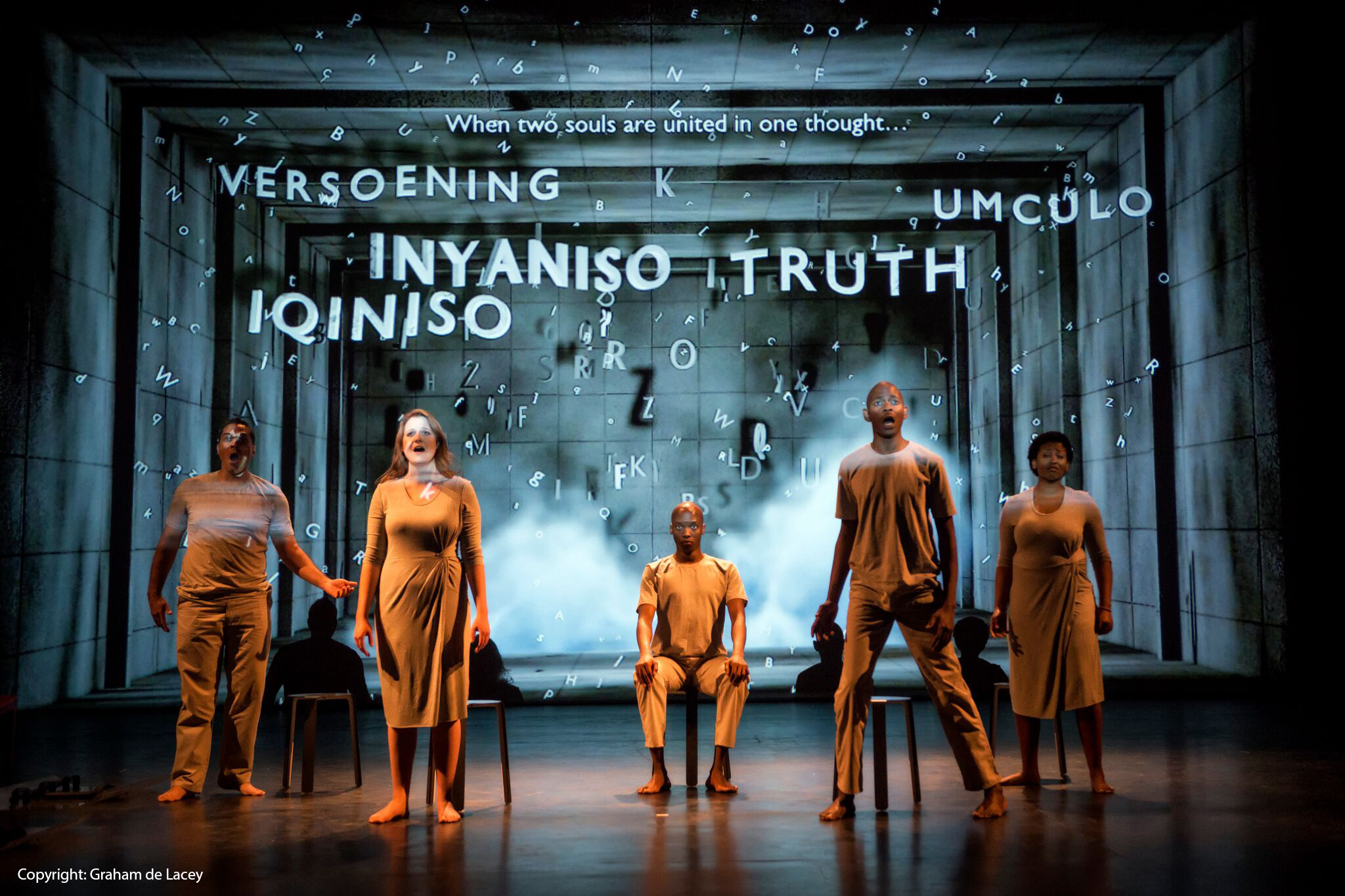
Ziyankomo and the Forbidden Fruit (2012) belongs to that corpus of cultural productions that are all-black cast but are produced and financed by white, mainstream finance. This position of being black-themed production financed by white finance brings multi-layered complexities. In the case of Ziyankomo, its composition: the libretto and music compositions are by African artists, just as its cast is black, but its financing and production are by a white-owned company, Opera Africa and mixture of corporate and post-apartheid government linked entities. This black-art-white-finance arrangement does not auger well with the ideological positions of the black-white politics in South Africa, in that it introduces into the production ambiguous, irreconcilable clashes that pit Africans’ call for liberation on one hand, with the maintenance of the logic of coloniality on the other. Ziyankomo selection of its historical narrative adds to this ambiguity in that it eschews honest reflections about Africans, in this case the Zulu historical experience and the violence of the colonial encounter. Instead, it opts for selective experiences that recreate detached, ahistorical surface representations, which fly in the face of the calls for decolonisation (Ngugi 1986) and decoloniality (Mignolo 2018). Arguably, Ziyankomo’s take on the motif of the figure of the dancing Zulu warrior locates it with a collection of South African productions whose revisiting of the image of the dancing Zulu warrior marks continuities with racist, colonial British representations of the Zulu warrior of the Empire Exhibitions. In South Africa, anthropological politics of the 1930s undergirded some constructions whereby there were massive calls for the retribilisation of the Bantu, the indigenous people of South Africa. Drawing from interdisciplinarity of epistemologies of whiteness studies, Eric Hobswam and Terence Ranger’s notion of invented traditions (1983) and Walter Mignolo’s concept of Decoloniality this article, intends to explore the historical underpinnings of ideological ramifications of the anthropological turn, which betrays long shadows of colonialist-apartheid values and their constrictions of post-apartheid contemporary African performances. The article argues that Ziyankomo is firmly located in cultural productions meant for exotic entertainment while simultaneously obfuscating contingent historical realities affecting Africans. The question the article raises relate to the extent to which ethnic nationalism can be tied to ontological understandings of pre-colonial value systems within a whiteness culture of erasure? Who funds black opera and how can such funding structures be seen to be advancing a decolonial question? Ziyankomo then in this discussion becomes anchor and site to investigate black opera production and issues of social justice within the current structures of its funding model.
Keywords
Black opera production, white finance, Zulu history, decolonisation, decoloniality